
Ejector and nozzle CFD analysis
An ejector that entrains less than expected, or a nozzle whose jet does not develop as intended, is governed by a few dimensions and the operating pressures. A CFD study links the performance to the nozzle, the mixing section and the diffuser, and compares alternatives.
Questions this work answers
- What entrainment ratio and pressure recovery does this geometry deliver at the operating pressures?
- Where are the losses: in the nozzle, the mixing section or the diffuser?
- How do nozzle position, throat size or mixing length shift the performance?
What the work covers
- Primary and secondary streams, treated as compressible where the pressure ratio requires it
- Velocity, pressure and temperature fields, jet core and mixing development, performance across operating points
- Checks: mass balance between inlets and outlet, mesh assessment in the shear layer, comparison with rig or operating data
What it cannot tell you
Performance near the critical regime is sensitive to the turbulence model and to small geometric details. The report gives the trend between variants with more confidence than a single absolute value, and says so.
Starting price · from USD 1,500 per project
Related studies
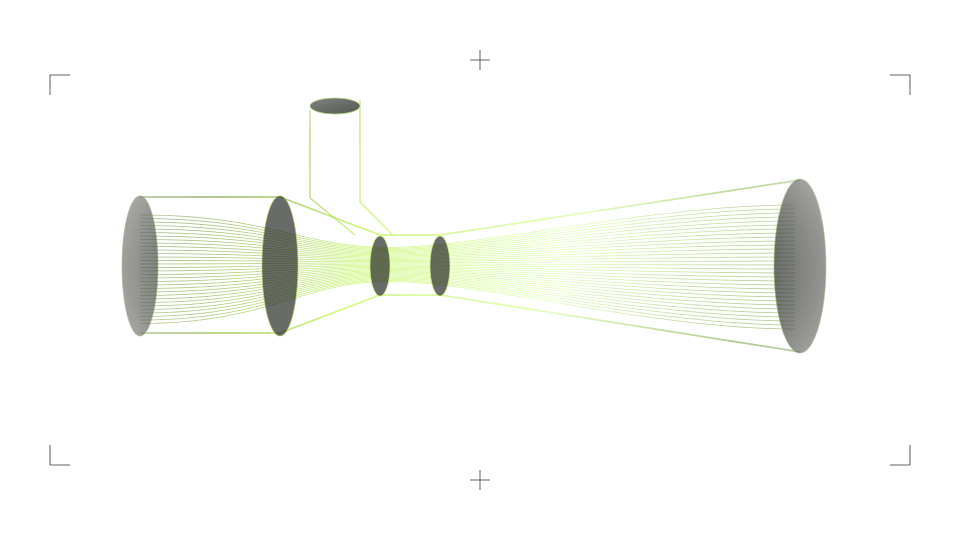 Fluid dynamicsEjector: connect the jet, entrainment and pressure recovery
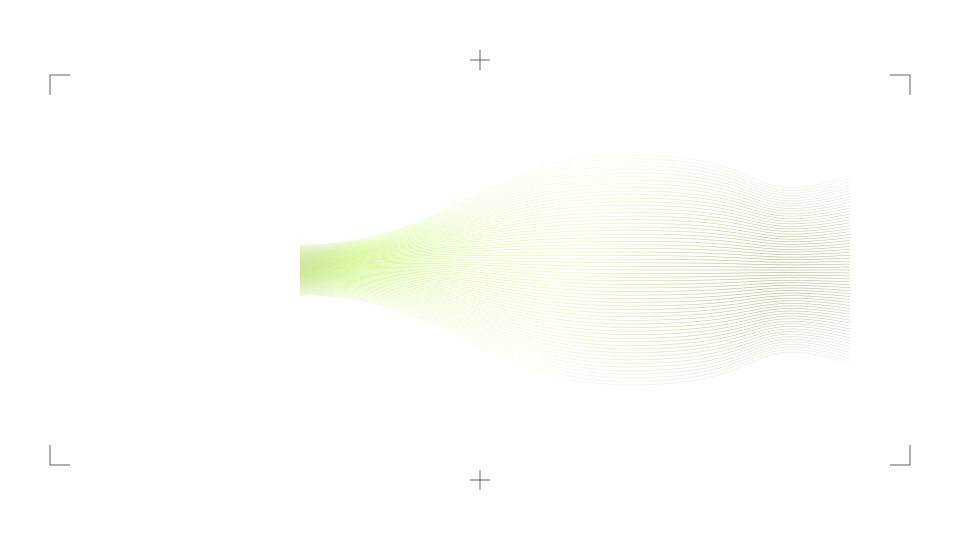 Fluid dynamicsNozzle: the first centimetres shape the entire flow
Related articleEjector CFD Simulation: Which Turbulence Model to Trust