
Heat exchanger CFD analysis
When a heat exchanger misses its duty or exceeds its pressure drop, the cause is usually inside: uneven flow between tubes or channels, bypass streams, dead zones. A CFD study shows where, and what a design change would do before you build it.
Questions this work answers
- Why is the pressure drop or heat duty different from the design calculation?
- How evenly is the flow distributed between tubes, passes or plate channels?
- Which change to baffles, nozzles, headers or tube shape is worth making?
What the work covers
- Shell-side and tube-side or channel flow, with conjugate heat transfer through the walls where the question needs it
- Flow distribution, local heat-transfer coefficients, temperature fields and pressure losses by section
- Checks: mass and energy balances, mesh assessment, comparison with a datasheet, a correlation or your test data
What it cannot tell you
Fouling, contact resistance and manufacturing tolerances are assumptions unless you supply data. A full-size exchanger is often modelled as a representative section, and the report states what that simplification leaves out.
Starting price · from USD 3,000 per project
Related studies
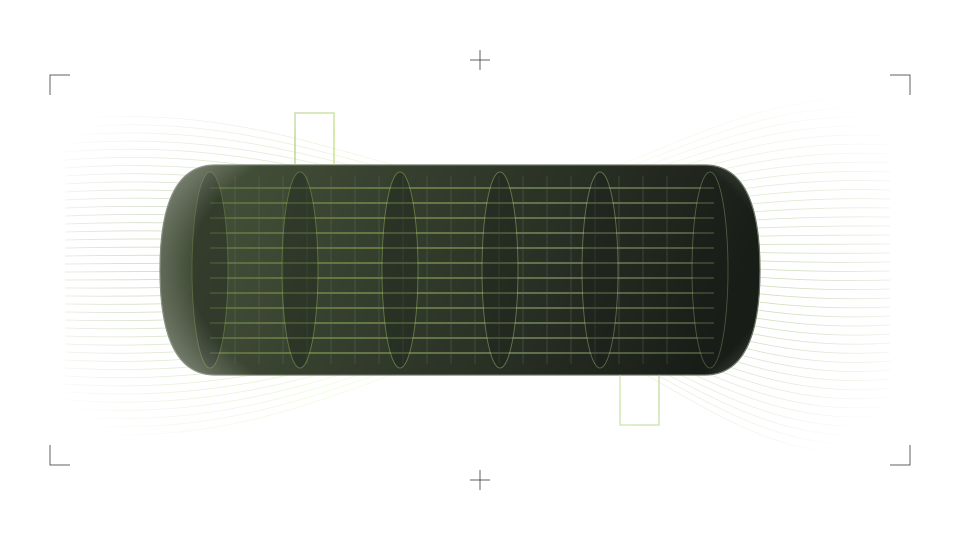 Heat transferHeat exchanger: flow and heat-transfer analysis
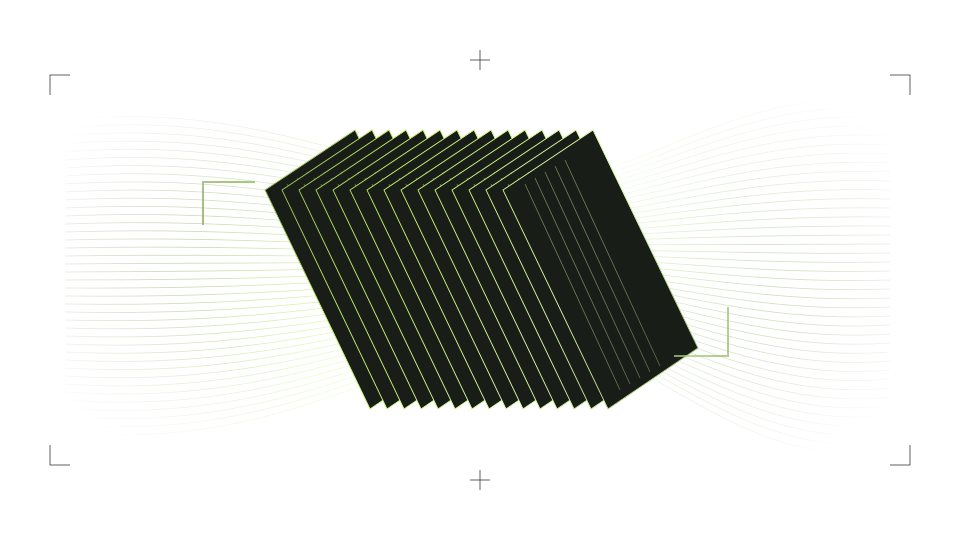 Heat transferPlate heat exchanger CFD study
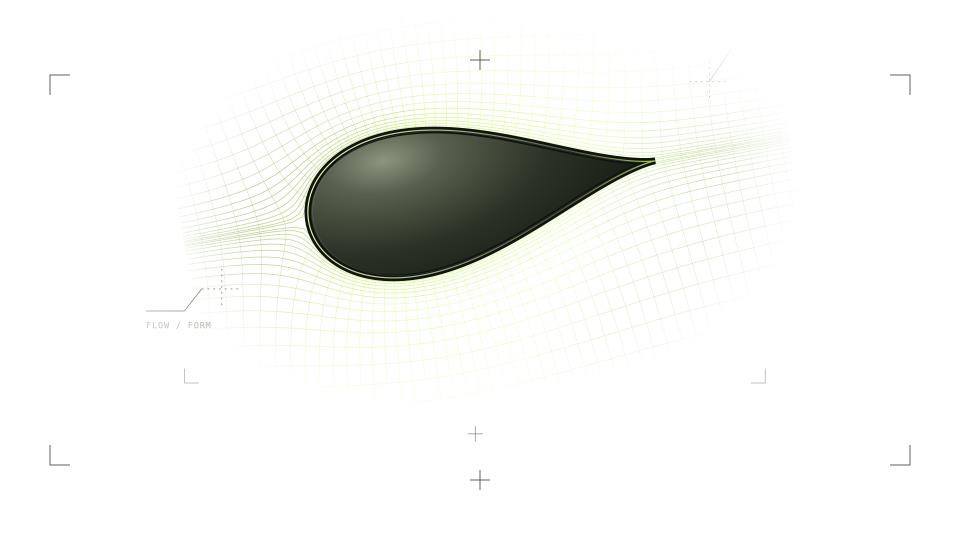 Fluid dynamicsExternal flow & heat transfer
Track record
- Patent RU-2848594
- Heat-exchanger bundle with circular and drop-shaped tubes.
- Book
- Development of thermal-energy models using ANSYS.
Related articleHeat Exchanger Flow Maldistribution: Why Units Miss Duty